






GRP Grating Solutions for Water and Wastewater Plants
Water and wastewater treatment plants operate in some of the harshest industrial environments. Constant exposure to moisture, chemicals, corrosive gases, and heavy operational activity demands infrastructure materials that can withstand long-term stress without failure. GRP Grating has emerged as one of the most reliable, durable, and cost-effective solutions for modern water and wastewater facilities that prioritize safety, efficiency, and longevity.
This article outlines the advantages, applications, and long-term value of using GRP grating in water and wastewater treatment plants.
The Importance of Durable Materials in Water Treatment Facilities
Water and wastewater facilities must maintain strict operational standards to ensure the safe treatment, flow, and disposal of water. These facilities operate around the clock, often in environments where humidity, chemicals, and heavy use can cause rapid degradation of conventional materials such as steel or timber.
Traditional grating systems face several challenges:
- Steel corrodes quickly in the presence of moisture and chemicals
- Timber weakens over time and requires regular replacement
- Metal walkways become slippery, raising safety concerns
- Maintenance costs are substantial due to frequent repairs
These challenges have driven plant operators to adopt GRP grating, a composite material designed to withstand the demanding nature of treatment plant environments.
Why GRP Grating Is Ideal for Water and Wastewater Plants
1. Exceptional Corrosion Resistance
GRP grating does not rust, rot, or corrode when exposed to water, chemicals, or industrial effluents. This makes it significantly more durable than steel in wet, acidic, alkaline, or chlorine-heavy environments commonly found in treatment facilities.
Its corrosion resistance results in:
- Longer service life
- Reduced maintenance requirements
- Lower long-term operational costs
- Consistent performance in harsh environments
2. Slip-Resistant Surface for Maximum Safety
Safety is a top priority in treatment plants, where slippery surfaces pose a major risk. GRP grating features a built-in anti-slip surface, often embedded with quartz grit, to give operators excellent traction even during wet weather, washing operations, or chemical spills.
Benefits include:
- Fewer workplace accidents
- Compliance with safety regulations
- Enhanced worker confidence in high-risk zones
3. Lightweight Yet Strong
Despite its lightweight construction, GRP grating provides outstanding strength and stability. Its high strength-to-weight ratio makes it easy to transport and install while still supporting heavy foot traffic and industrial loads.
This reduces:
- Installation time
- Labour costs
- Use of heavy lifting equipment
4. Chemical and UV Resistance
Water treatment plants frequently involve exposure to harsh chemicals, from chlorine to sulfur compounds. GRP grating resists chemical degradation, maintaining structural integrity even in the presence of aggressive substances.
UV-resistant formulations ensure:
- Long-lasting colour retention
- No surface cracking
- Long-term performance in outdoor areas
5. Electrical and Thermal Non-Conductivity
GRP grating is non-conductive, protecting workers from electrical hazards in areas with pumps, wiring, and control systems.
Thermal non-conductivity also means:
- Cooler surface temperatures
- Reduced risk of burns
- A safer environment around heat-generating equipment
6. Low Maintenance Requirements
Unlike metal grating, GRP does not require recoating, galvanising, sanding, or repainting. Routine cleaning is generally enough to maintain its performance and appearance, saving both time and maintenance budgets.
Applications of GRP Grating in Water and Wastewater Plants
GRP grating can be used throughout treatment facilities due to its versatility and performance. Common applications include:
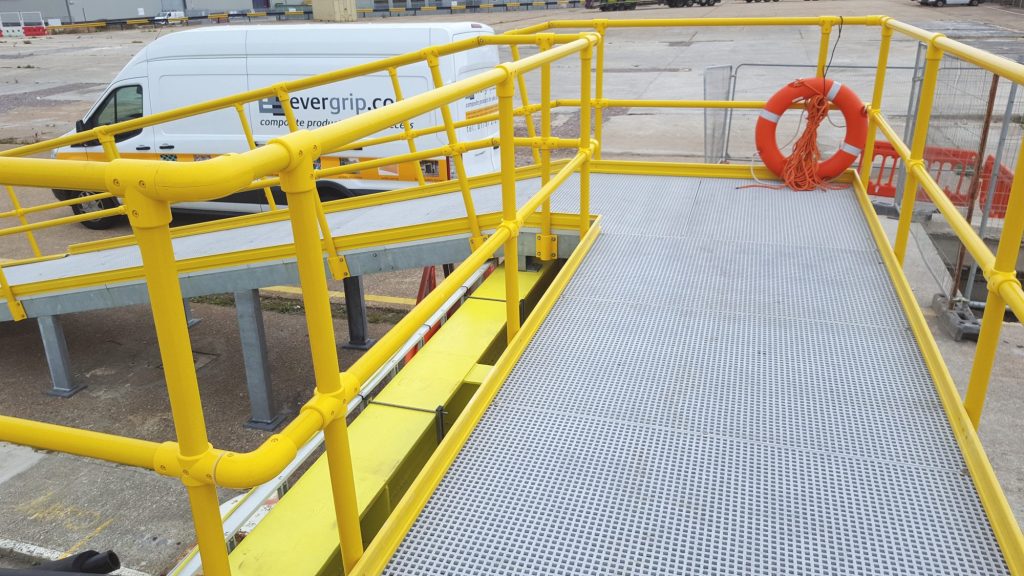
Walkways and Access Platforms
GRP grating provides safe, non-slip walkways around tanks, basins, clarifiers, and filtration units. Its lightweight properties make installation easy, even in difficult-to-access plant areas.
Chemical Dosing Areas
Exposure to corrosive chemicals requires materials that can resist constant chemical contact. GRP grating ensures long-term durability in chemical dosing stations.
Pump and Motor Rooms
Non-conductive GRP grating enhances safety around electrical equipment, while its anti-slip surface reduces the risk of falls in busy pump rooms.
Screening and Filtration Zones
Areas around bar screens, grit chambers, and filtration systems experience heavy moisture and debris. GRP grating withstands these conditions without degradation.
Elevated Platforms and Catwalks
GRP grating offers high strength with reduced weight, making it ideal for elevated maintenance platforms that require stability without excessive structural load.
Drainage Covers
Because GRP grating allows excellent water flow and resists long-term exposure to wet conditions, it is commonly used as drainage trench covers throughout treatment facilities.
Customisable Options for Plant Requirements
Water and wastewater plants often require tailored solutions to fit unique operational demands. GRP grating can be customised in terms of:
- Size and thickness
- Resin formulation
- Surface grit level
- Load-bearing capacity
- Colour coding for safety zones
- Cut-to-size sections for on-site fitting
Custom fabrication ensures perfect integration with existing infrastructure and improves operational reliability.
Long-Term Cost Benefits of GRP Grating
Although GRP grating may have a higher initial cost compared to traditional materials, the long-term benefits significantly outweigh this investment. Key cost advantages include:
- No rust or corrosion-related repairs
- No repainting, coating, or sealing
- Significantly reduced maintenance labour
- Extended lifespan, often exceeding 25 years
- Lower installation costs due to lightweight handling
Ultimately, GRP grating contributes to a lower total cost of ownership, making it a financially sound investment for water utilities and municipalities.
Environmental Benefits
GRP grating supports sustainability goals within modern water treatment facilities. Its long lifespan reduces waste, while the material itself can be recycled at the end of its service life. Less maintenance also means fewer harmful chemicals, coatings, and paints are required.
Conclusion
The operational demands of water and wastewater treatment plants require materials that deliver exceptional durability, safety, and long-term value. GRP grating provides all these benefits and more, making it the superior choice for modern treatment facilities seeking cost-effective solutions without compromising performance. Its corrosion resistance, non-slip properties, strength, lightweight design, and low maintenance needs position GRP grating as a future-focused solution that enhances both safety and operational efficiency.
Whether used for walkways, platforms, chemical dosing areas, or drainage covers, GRP grating ensures reliable, safe, and long-lasting performance in even the harshest water treatment environments. Your next great read is waiting on our homepage—check it out now.